FutureAir

On August 8, ​the​ United States Court of ​Appeals​ ​ruled against restrictions to ​products​ ​that contain​ ​hydrofluorocarbons​ ​(HFCs)​​.​ ​HFCs​ ​are​ ​a​ ​harmful​ ​greenhouse​ ​gas​ ​that​ ​trap​ ​heat​ ​in​ ​the atmosphere.​ According​ ​to​ Inside​ ​Climate​ ​News, ​​the​ ​ruling​ ​was​ ​in​ ​favor​ ​of​ ​two​ ​foreign HFC​ ​manufacturers (Mexichem Fluor and Arkema),​ ​holding​ ​that​ ​the​ ​“EPA​ ​had​ ​no​ ​authority​ ​to​ ​regulate​ ​the​ ​gases​ ​under the​ ​Clean​ ​Air​ ​Act.” This was bad news for Honeywell International and Chemours, companies that have been manufacturing less harmful coolant chemicals called hydrofluoroolefins.

The​ ​court​ ​ruling​ ​“​shows​ ​that​ ​at​ ​least​ ​some​ ​judges​ ​think​ ​the Environmental Protection​ ​Agency​ ​needs​ ​more​ ​specific​ ​authority​ ​from​ ​Congress​ ​to​ ​act​ ​on​ ​HFCs.”​ ​The legal​ ​loophole​ ​in​ ​a​ ​nutshell:​ ​the​ ​EPA​ ​has​ ​authority​ ​to​ ​regulate​ ​ozone-depleting​ ​gases,​ ​but not​ ​other​ ​harmful​ ​substances.​ ​HFCs​ ​were​ ​the​ ​alternative​ ​to​ ​the​ ​older​ ​chemicals​ ​that​ ​were harmful​ ​to​ ​the​ ​ozone​ ​layer.​ ​And​ ​though​ ​HFCs​ ​don’t​ ​deplete​ ​the​ ​ozone,​ ​they​ ​are​ ​still considered​ ​greenhouse​ ​gases​ ​that​ ​are​ ​incredibly​ ​impactful​ ​on​ ​climate​ ​change.​​ ​“Congress has​ ​not​ ​yet​ ​enacted​ ​general​ ​climate​ ​change​ ​legislation,”​ ​Judge​ ​Brett​ ​Kavanaugh​ ​wrote.​ ​In response,​ ​“Judge​ ​Robert​ ​Wilkins,​ ​an​ ​Obama​ ​appointee,​ ​dissented,​ ​saying​ ​that​ ​the​ ​EPA was​ ​due​ ​deference​ ​for​ ​what​ ​he​ ​said​ ​was​ ​a​ ​reasonable​ ​interpretation​ ​of​ ​the​ ​statute.”​ ​

Chemical and Engineering News states that “the EPA rule would have banned the use of HFC-134a as an air conditioner refrigerant in most cars and trucks sold in the U.S. starting with model-year 2021.” All avenues​ ​for​ ​appeals​ ​to​ ​this​ ​ruling​ ​are​ ​being​ ​explored.

The​ ​original​ ​Obama-era​ ​ruling​ ​was​ ​an​ ​important​ ​piece​ ​of​ ​the​ ​puzzle​ ​to​ ​meeting the​ ​Paris​ ​Climate​ ​Accord​ ​goals,​ ​and​ ​would​ ​have​ ​significantly​ ​cut​ ​our​ ​carbon​ ​emissions. This​ ​commitment​ ​to​ ​phasing​ ​out​ ​HFCs​ ​was​ ​furthered​ ​by​ ​meetings​ ​in​ ​Kigali​ ​in​ ​2016, when​ ​the​ ​Montreal​ ​Protocol​ ​was​ ​updated.​ ​The​ ​Montreal​ ​Protocol​ ​was​ ​a​ ​treaty​ ​signed​ ​in 1987​ ​that​ ​successfully​ ​phased​ ​out​ ​an​ ​older​ ​generation​ ​of​ ​refrigerant​ ​gases​ ​that​ ​are harmful​ ​to​ ​the​ ​ozone​ ​layer.

As​ ​the Inside Climate News ​article​ ​states,​ ​“the​ ​Trump​ ​administration​ ​has​ ​given​ ​no​ ​indication​ ​of whether​ ​it​ ​intends​ ​to​ ​bring​ ​the​ ​Kigali​ ​amendment​ ​before​ ​the​ ​Senate​ ​for​ ​ratification.”​ ​But there​ ​was,​ ​and​ ​still​ ​could​ ​be,​ ​hope​ ​to​ ​maintain​ ​the​ ​Obama-era​ ​rulings​ ​during​ ​the​ ​Trump administration.​ ​Chemical​ ​manufacturers​ ​that​ ​have​ ​worked​ ​with​ ​Trump​ ​are​ ​investing​ ​in more​ ​climate-friendly​ ​alternatives​ ​to​ ​HFCs.​ ​Climate​ ​change​ ​ingenuity​ ​and​ ​the​ ​bottom​ ​line are​ ​by​ ​no​ ​means​ ​mutually​ ​exclusive.​ ​The​ ​way​ ​we​ ​cool​ ​ourselves​ ​could​ ​be​ ​a​ ​bipartisan issue.​ ​American​ ​companies​ ​have​ ​the​ ​potential​ ​to​ ​act​ ​as​ ​leaders​ ​in coolant technology.​

Air conditioning has become a convenience that we take for granted across the United States. It is responsible for the comforts of modern living beyond just room temperature. And it is connected to almost every industry in ways that aren’t always visible. But it wasn’t always that way. A recent New York Times article titled “How Air Conditioning Conquered America (Even the Pacific Northwest),” by Emily Badger and Alan Blinder, tracks our dependence on air conditioning since the 1950’s—and it goes much deeper than you might expect.

Air conditioning has made economic growth practical in the hottest regions of the United States. “It made possible industrial work like printing, food processing and electrical manufacturing that would be hard to manage in sweltering heat. And it created the possibility for white-collar jobs in mechanically cooled office buildings.” Imagine production and progress being feasible in the humid south without central air.

Cooling technologies have everything to do with infrastructure and city planning. Sprawl is viable, and traffic is tolerable, because of air conditioning in cars. It made places like Phoenix, which is considered a relatively new city, possible. Types of building designs are also informed by air conditioning in regions like the Southwest, where wood housing is now used instead of just concrete construction.

Of course, these kinds of design decisions are problematic and unsustainable. “‘With the advent of air-conditioning, we lost a lot of the common sense,’ said Kirk Teske, the chief operating officer at HKS Architects, with headquarters in Dallas. He worries that regions like the Northeast may lose it, too, setting up future challenges for office workers and residents when blackouts or other natural disasters come.”

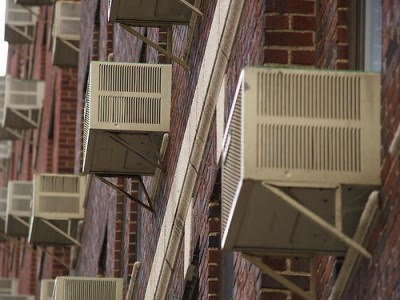
And individual air conditioning use is on the rise as global temperatures increase (which in turn contributes to global warming in that disastrous loop). Even regions that historically never relied on air conditioning are now closer to the consumption of hotter regions like the South. In the Midwest, central air is built into 94% of new single-family homes. And across the US, window units are used in older buildings. In the Pacific Northwest, where there have been record-breaking heat waves this summer, more and more households are purchasing these units. “In 1990, just a third of households there used central air or window units. Now twice as many do.”

Air conditioning is connected to all of our modern conveniences, the infrastructure of our cities, and the economic growth of our country, including our digital lives (cooling is necessary for server farms and data centers). Our reliance on air conditioning isn’t going to shrink, but we can think more conscientiously about our use and design, and create a new kind of common sense.

Located just outside of Jaipur, India, the Amer Fort, also known as the Amer Palace, was built in 1592 by Raja Man Singh, and remains in pristine condition today. Like many Indian palaces, buildings, and urban dwellings, the Amer Fort still benefits from some of the most traditional and exquisite air cooling technologies. By creating different rooms and places for different climates and temperatures, the Fort’s architects planned for the seasonal use of varying spaces throughout the palace grounds. For example, the “Pleasure garden” is located in the center of a lake and is used for exceptionally hot summer days. If the palace’s dwellers or visitors become uncomfortable outdoors, they can migrate to the center of the lake to cool off. Similarly, inside the Amer Fort movable screens and curtains were used to keep spaces like the emperor’s throne as cool as the open lake. As Vinod Gupta, Assistant Professor of Architecture at the School of Planning & Architecture in New Delhi, writes, “It is said that in summer there were three sets of screens used, two of them grass mats kept wet by sprinkling of water. Heavy quilted curtains were suspended in place of these screens in winter.” Additionally, one of the most fascinating air cooling technologies employed at the Amer Fort are the apertures, some of which are no larger than one centimeter, designed to let in air which then gets cooled within the larger structure of the building by filtering through an underground (and therefore shaded) tunnel where air flows over shaded water (pictured) to keep it cool.

While beginning to write this post I found myself struggling to employ the appropriate lexicon to describe the concept of air cooling without air conditioning, an area of study important to FutureAir but still somewhat obscure to an average city dweller like myself. As Gupta writes, the energy crisis has spurred the accumulation of a vast body of literature about “passive cooling systems,” or technology that cools air naturally and sustainably, but he argues that the strategies employed by indigenous Indian builders and architects remain the most developed. According to Gupta, “When [modern] architects talk of passive cooling, it is as if the maintenance of certain specified temperatures in a building is an end in itself. On the other hand, the indigenous builder could not care less if the building was cool or warm so long as people could be comfortable within or without the building.” Without electricity indigenous Indian architects used their knowledge of physics and the climate in which they lived to strive for comfortable and utilitarian structures, which are, as a result, quite beautiful.

REFERENCES
“Amer Fort.” Jaipur: The Pink City, August 24, 2016. http://www.jaipur.org.uk/forts-monuments/amber.html.
Gupta, Vinod. Energy and Habitat: Town Planning and Building Design for Energy Conservation. John Wiley & Sons (Asia) Pte Ltd, 1984.