
FutureAir

This is Air

‘There are these two young fish swimming along, and they happen to meet an older fish swimming the other way, who nods at them and says, “Morning, boys, how’s the water?” And the two young fish swim on for a bit, and then eventually one of them looks over at the other and goes, “What the hell is water?”‘

David Foster Wallace famously relayed the fish parable during his 2005 commencement speech at Kenyon College. The tale prefaced a lecture arguing against living an oblivious, unconscious life. Now, his most widely read essay, “This is Water”, is a testament of the times; times in which we often chose oblivion over awareness.

Over the course of the past five years, FutureAir has focused on the science of air – examining how and why indoor air is often more dangerous than the air outside – with the goal of improving the air we breathe indoors. The formula is simple: expand awareness of the problem and then provide a solution. We want people to look around and ask “What the hell is indoor air?” and later yell out, “AIR IS ABOUT MORE THAN JUST TEMPERATURE!”

Most of us never thought to question the air in the spaces where we spend most of our time – home, office, school; we didn’t think twice when buildings were sealed and non-operable became the norm. We do not even consider that thermostats should measure more than just temperature; nor can we recall when the first state-wide ban on smoking indoors went into effect (in 1995).

FutureAir’s inquiry into the seemingly common elements that surround us begs the importance of considering “hard-to-see” forces at work around us. FutureAir awakens us to the reality that the systems most familiar to us are often the ones we question the least and the things we take for granted may lead to unforeseen harm. In probing the atmosphere around us, we uncover endless opportunities for improvement.

Read the next segment of our inquiry into the invisible forces around us here.

Wallace, David Foster. This Is Water: Some Thoughts, Delivered on a Significant Occasion about Living a Compassionate Life. Little, Brown, 2009.

Written by Mollie Wodenshek for Future Air

The Coronavirus pandemic has taken our world by storm, and it is our responsibility to continue to examine the forces at work that lead to unforeseen harm.

As our “normal” life has come to a halt the invisibility cloak has been lifted. We now see the individuals most at risk, we now see the areas with the most fraught medical infrastructure and their population demographics, we now see those workers deemed essential, we see the people that uphold our daily lives. We also see that visibility does not beget equality, and the distance between visibility and equality is work.

A study from the Center for Disease Control released on April 8, 2020, details how 33% of COVID-19 hospitalized patients are African American descent and the black demographic accounts for 13% of the U.S. population. In comparison, the white demographic, which accounts for 76% of the U.S. population, made up 45% of COVID-19 hospitalizations [NPR]. Evidently, the African American community is disproportionately affected by coronavirus.

Essential workers are required to continue working at no additional compensation for the added risk of contracting coronavirus. Many of these workers are paid minimum wage. The Trump administration recently suggested cutting wages of foreign guest workers on U.S. farms in order to assist the agriculture industry – an industry that received a $9.5 billion disaster aid relief package [Common Dreams]. Vulnerable workers are deemed essential and undercut in one fell swoop.

The New York Times detailed findings from a Harvard study in which higher rates of outdoor air pollution are associated with higher rates of hospitalization from COVID-19. Communities with high rates of PM 2.5 are at greater risk of illness. Those areas with the highest rates of pollution are also home to some of the most vulnerable communities. In New York City, areas of Queens, with numerous polluting power plants, have been hit hardest by the coronavirus, which is home to dense immigrant communities.

How have we played a role in creating these realities?

The evidence goes on. There are countless examples of injustice and inequality throughout our ‘normal’ daily lives, but on any other day, we choose ignorance. Coronavirus has exposed our fraught democratic system and shined a light on the overlooked and marginalized communities within that system. The evidence is more potent and direr than ever, and we must choose to see the forces of inequality, acknowledge the disenfranchised, and we must unlearn ingrained and inherited systems of inequality.

In these trying times, we may not have all the solutions…or any solutions at all. But at this moment, FutureAir is looking for the bright side – read about it here.

Aubrey, Allison, and Joe Neel. “CDC Hospital Data Point To Racial Disparity In COVID-19 Cases.” NPR, NPR, 8 Apr. 2020, www.npr.org/sections/coronavirus-live-updates/2020/04/08/830030932/cdc-hospital-data-point-to-racial-disparity-in-covid-19-cases.

Friedman, Lisa. “New Research Links Air Pollution to Higher Coronavirus Death Rates.” The New York Times, The New York Times, 7 Apr. 2020, www.nytimes.com/2020/04/07/climate/air-pollution-coronavirus-covid.html?referringSource=articleShare.

Johnson, Jake. “’Bullying of Marginalized Workers’: Trump Moves to Slash Pay of Guest Farmworkers Amid Covid-19 Crisis.” Common Dreams, 11 Apr. 2020, www.commondreams.org/news/2020/04/11/bullying-marginalized-workers-trump-moves-slash-pay-guest-farmworkers-amid-covid-19.

Schuessler, Jennifer. “The Overlooked History of Women at Work.” The New York Times, The New York Times, 16 Jan. 2020, www.nytimes.com/2020/01/16/arts/design/womens-work-grolier-club.html.

Written by Mollie Wodenshek for FutureAir

Harvard Study shows a link between cognitive functioning and indoor air quality in office environments

The Harvard study “Associations of Cognitive Function Scores with Carbon Dioxide, Ventilation, and Volatile Organic Compound Exposures in Office Workers: A Controlled Exposure Study of Green and Conventional Office Environments” outlines the relationship between indoor air composition and cognitive function. Unlike various other biased studies done on indoor air quality, where test subjects were often told of the poor air quality before taking or participating in the experiment, Joseph G. Allen and his team designed their experiment to be as fair as possible, citing their goal to “objectively quantify the impact of indoor environment on higher order cognitive function.”

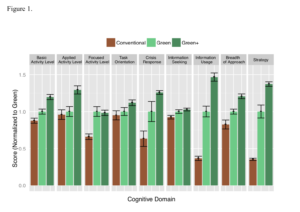
Allen and his team ran an experiment that isolated the effects of poor indoor air quality on office workers, using the Strategic Management Simulation (SMS) computer-based cognitive test, two identical office spaces, and different kinds of air pollutants. When introducing participants to the study, it was essential that Allen and his team not reveal the status of the indoor environment, as it might influence the subjects’ behavior. The participant pool was comprised of 24 professional-grade employees who were instructed to arrive at 9 a.m. on 3 specific days for two consecutive weeks. Participants were encouraged to perform their usual work until 3 p.m., when they would be given the SMS test. Behind the scenes, however, Allen and his team were artificially controlling the levels of outdoor air, CO2, and VOCs in the offices. Air movement throughout the office was kept constant at 40 cfm/person, but the amount of outdoor air flowing through the ventilation system, CO2, and VOCs were variable and manipulated throughout the test.

Allen and his team used different amounts of outdoor air, CO2, and VOCs for each of the days, experimenting with “Conventional” office levels, “Green” office levels, and optimal concentrations they called “Green+” office levels.

Since the SMS test could be objectively scored with a numeric value, Allen and his team were able to normalize the scores across the test sections into coherent charts. As shown in the graph, tests taken in the “Conventional” office environment were consistently the lowest in every category. The largest differences between the “Conventional” and the other, more optimal office settings can be seen in the categories, “Crisis Response,” “Information Seeking,” and “Strategy.” Allen and his team confirmed that the results of five of the nine total functions tested in the SMS were statistically significant.

The results, while not conclusive, do demonstrate a correlation between certain cognitive functions and the environment in which one works. Studies such as this one are useful because they help make lesser known issues like indoor air quality more mainstream in the scientific community, which increases the chance that future studies will come up with a solution that ends the problem.

Written by Ryo Shimada for FutureAir.

A recent article from The New York Times suggests that the conversation about indoor air quality has entered the collective consciousness. That is to say, beyond physical health risks, indoor air quality effects on our mental capabilities as well.

For the last fifty years, builders and contractors have focused on eliminating the threats of outdoor air pollution while inside. Building codes require sealing that reduce the amount of air flow in exchange for better greater efficiency for heating and cooling systems. However, these sealing processes have created dangerous indoor climates. When we sit in sealed room toxins from chemical product treatments and our own human breath build up and create harmful environments.

Studies have demonstrated the detrimental effects that indoor air toxins pose to brain function. In 2009, William Fisk, a mechanical engineer at Lawrence Berkeley National Laboratory, experimented with indoor air pollution and found that people performed far worse when exposed to levels of carbon dioxide at 2,500ppm than those exposed to 1,000ppm of carbon dioxide. The New York Times stated that these levels are not usual in crowded spaces.

Since Dr. Fisk’s study, other scientists have taken up the issue of indoor air pollution. A Harvard study tracked its participants over a six-day period. They found that over the time span, as the levels of carbon dioxide grew from 500 ppm to 1,400 ppm, participants test score plummeted. The scientists were stunned by the results, not because of the decline in mental functions, but because the carbon dioxide levels they experimented with were not unusual. The levels of carbon dioxide they tested could be found in most indoor settings.

Although these studies demonstrate a negative relationship between indoor air quality and cognitive performance, the evidence is still far and few between. As The Times pointe out, other experiments have not met the same conclusion. The truth is that if you’re not looking for the effects of indoor air pollution, then you will not find them. Indoor air pollution is a silent killer.

Ultimately, we spend most of our times indoors and most of the time, our most important decisions are made indoors, often in small rooms with no ventilation. The New York Times’ article, “Is Conference Room Air Making You Dumber?” begs the question.

Other evidence suggests, “increasing the ventilation rate in schools can raise children’s scores on tests and speed at tasks, and reduce absences.” If we are already designing spaces for maximum performance and productivity, then these studies suggest going the extra mile to account for the factors that we cannot see.

The article concluded, “without a specialized sensor, you can’t really know how much carbon dioxide is building up while you hunker down in a small room for a long meeting.” If we only change the things that we can see and measure (think heating and cooling efficiency) than it is imminent that we invest in tools to make the invisible visible. Accounting for air quality in the spaces we spend the most time in will improve our health, cognitive functions, and our peace of mind.

“Is Conference Room Air Making You Dumber?” The New York Times

Written for FutureAir by Mollie Wodenshek

Image Credit: Hanna Barczyk

Since 2010, toxic air in London has been at illegal levels, and for a brief period last year, air pollution in London was even worse than Beijing, according to statistics from the London mayor’s office. This air has a direct effect on the lives of Londoners, with more than 9,000 dying prematurely each year, and the air itself is no doubt the result from vehicles on the road–including those that use diesel.

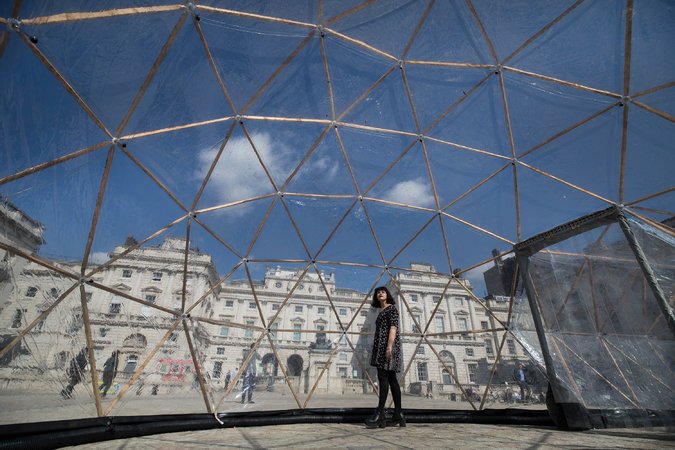
Despite the statistics, Londoners seem to be unaware of how severe the problem is. But artist Michael Pinsky set off to change that by setting up an exhibit on the grounds of the Somerset House which included five geodesic domes, or pollution pods, each designed to simulate the atmospheric conditions in Beijing; São Paulo; London; New Delhi; and Norway’s Tautra Island by recreating the local air using safe chemicals.

Pinsky’s hope was that by directly experiencing levels of pollution from around the world, people would be galvanized to act.

“In terms of driving behavioral change, the thing that seemed important was to pick something that affects everyday life,” he said. “I picked London because pollution is something I feel every day.”

A tour through these geodesic pollution pods from least to most polluted would leave one walking from Tautra Island, to London, to Beijing, to New Delhi, and then finally to São Paulo, where the air is so noxious it made guests desperate to get out. Those visitors from rural locations suffered the most, suggesting that it may be possible to grow numb to constant high levels of outdoor air pollution. Londoners shared their own experiences with London’s pollution, reporting discolored mucus, difficult exercising outdoors, and purchasing plants to improve indoor air quality.

In addition to hosting the exhibit, Somerset House also raised a new Union Jack flag for Earth Day that changes color in real time as it reacted to London’s air quality, transforming from red, white, and blue to gray and black as it reacts to levels of radiation exposure.

Click here to read the full article.

Sadly, wildfires have become common for residents in states such as California and Oregon, prompting them to consider how best to deal with the smoke and ash that lingers afterwards for weeks or even months. Many residents have taken to air purifiers to help reduce the particulate pollution in their homes, and Tim Heffernan, a science writer and editor at Wirecutter, has offered some advice for those looking to purchase such a device.

At a minimum, Heffernan recommends HEPA certified air purifiers, which are rated to remove 99.97 percent of particles that are exactly 0.3 microns in diameter, though he also tested and found positive results with certified models that remove virtually all particles as small as 0.01 micron, one-thirtieth the HEPA standard.

“Most of us spend a lot of time indoors,” Mr. Heffernan said. “And indoor air is more polluted than outdoor air. It kind of comes down to what we have in our homes: pets, rugs, furniture that traps dust. And many homes are not terribly well ventilated.”

In addition to the HEPA certification–which Heffernan states should be listed as “true HEPA”–individuals seeking an air purifier will want to make sure the device has a tight seal around the filter to get the full effect of the device. Some models may list a CADR (Clean Air Delivery Rate) rating, which will indicate how efficiently the model will work depending on the size of the room it’s placed in. Heffernan suggests a CADR of at least 200, which means the unit effectively delivers the equivalent of 200 cubic feet of pure air per minute.

For a more cost-effective solution, it’s also possible to upgrade an existing HVAC system to improve air quality with filters that trap smaller particles. In these instances, filters with a MERV (Minimum Efficiency Reporting Value) rating between 7 and 13 are likely to be nearly as effective as “true HEPA” filters.

Within the air purifier market, buyers should watch out for dubious additional features, such as models that produce ozone to destroy pathogens (ozone is actually a respiratory system irritant) and ones that claim to reduce VOCS (volatile organic compounds), as very few models truly have such a capability.

Regardless of model, Heffernan recommends checking an air purifier every six months for buildup on the filter. Furthermore, for those in smoke-afflicted areas, Heffernan suggests keeping windows closed when possible, washing sheets and pillowcases, and when able mopping instead of vacuuming to avoid kicking up any dust or smoke that’s settled. Lastly, for those wishing to purchase a face mask, they should seek masks with an N95 or P100 rating, as these are the necessary levels to provide adequate protection from smoke particles.

Click here to read the full article.

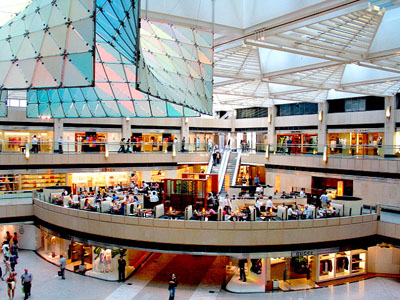
Indoor air quality has become a major health issue throughout the world as rising levels of outdoor air pollution continue to make the air inside homes and facilities toxic. This indoor air quality epidemic even extends to malls, underscoring the importance for you to understand your mall’s air quality and how it can affect your overall health and well-being.

“The problem occurs when polluted outside air infiltrates the ventilation system of a mall,” stated Camfil’s Charlie Seyffer, Manager of Marketing & Technical Materials and 37-year ASHRAE member and active committee participant. “These are pollutants such as dust, smoke, and pollen, and they can cause a variety of respiratory problems if that mall is not equipped with commercial air filters that can eliminate these harmful particulates from the air.”

In addition to outdoor pollutants, there are also indoor air pollutants found in malls that can contribute to the problem, such as the chemicals and solvents used by dry cleaners, VOCs–or volatile organic compounds– present in the products sold at hardware and home furnishings stores, and the byproduct emissions caused by frying and broiling at fast food kiosks.

A study performed by Hong Kong researchers of nine malls across Hong Kong found significant concentrations of carbon dioxide, carbon monoxide, hydrocarbons, formaldehyde, particulate matter (PM10), as well as various strains of bacteria inside all of the malls examined. The high concentration of PM10 is of special concern, as these pollutants–such as dust, pollen, and mold–can lodge in the lungs and lead to respiratory problems. People with a history of heart disease or lung problems are particularly vulnerable to PM10 as well as PM2.5, a similar pollutant that consists of even smaller particles and which was identified as a pollutant in the study. Both of these pollutants also pose a danger to children and the elderly, because these groups tend to have immune systems that are not fully developed or weak due to aging.

While there’s not much an individual can do to directly counter the pollutants found in malls, they can be more aware of their surroundings and keep an eye out for symptoms that might indicate exposure to high levels of pollutants, such as eye, nose, and throat irritation, tightness of the chest, shortness of breath, and coughing.

Click here to read the full article.

Mourning the Old Air

I grew up in Portland, Oregon and can’t remember a Labor Day as hot as the one that just passed. Now that I live in Los Angeles, I thought I would escape the swelter by going north to visit my family, but it broke a hundred degrees in both cities that week. And in the midst of these heat wave, fires started in both of my homes.

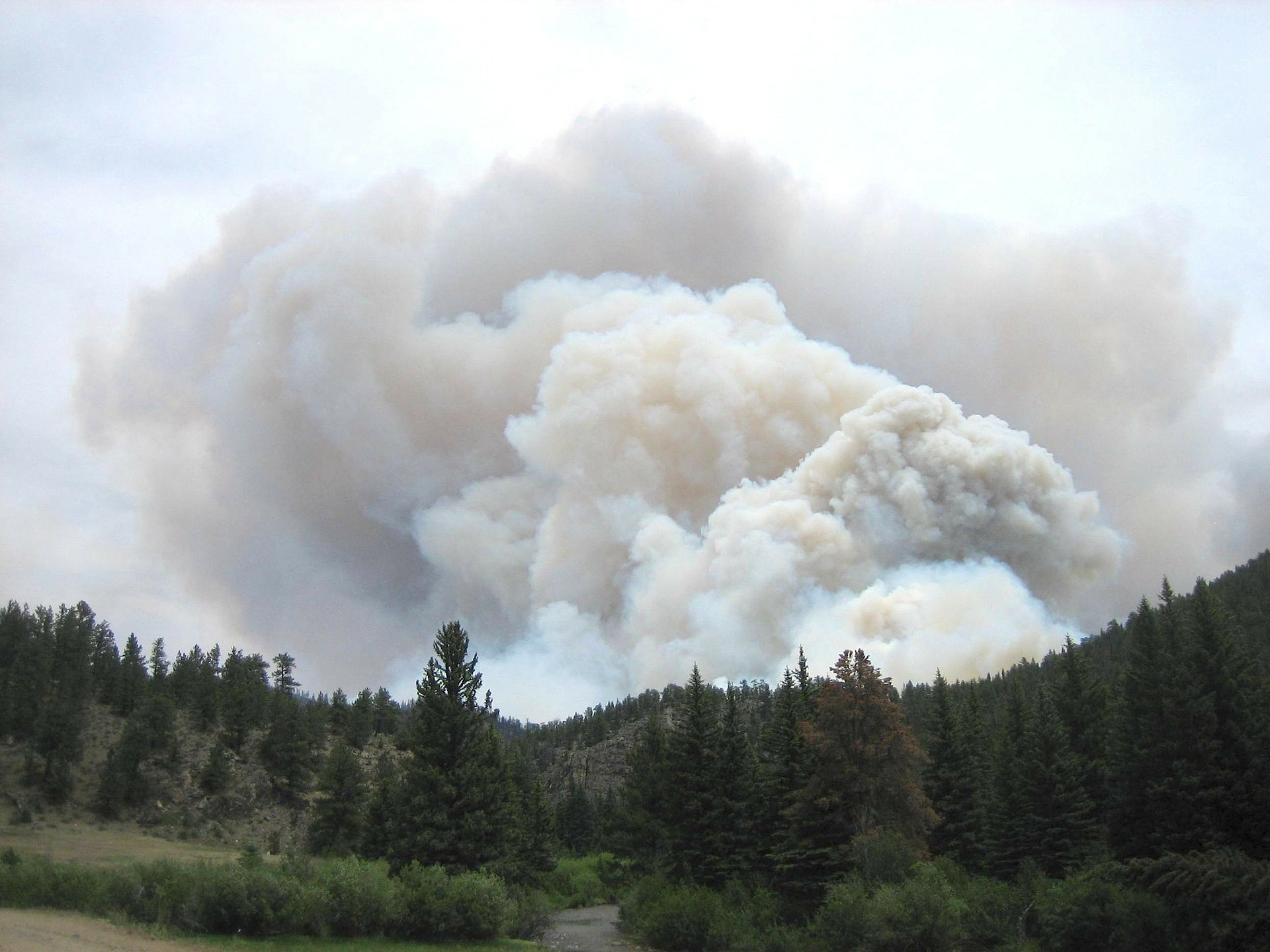
Flying into Portland, I was struck by a showy sunset. I was right in line with the glowing clouds in a way I’d never been, so that they formed another horizon at eye-level. Directly above was the fluorescent orange sun, and below was a hem of bright pink and the city lights under that. The sun hadn’t quite dipped, but night seemed to have settled already.

I didn’t know then that what I was seeing was a thick layer of smoke.

The Eagle Creek fire, around the Columbia River Gorge east of Portland, is still only seven percent contained over a week later, covering about 34,000 acres. The main highway is closed for the next week. And, heartbreakingly, many of the trails I hiked as a child will be inaccessible or destroyed. The region is mourning the loss of these sites of shared, natural beauty.

At the same time, the La Tuna fire in Burbank ignited. People in the city had to evacuate their homes. When I landed in Burbank the next week, it was only thirty percent contained, but colder air was sweeping in. As of September 9, it was one-hundred percent contained. 7,194 acres were burned around the Verdugo Mountains.

On my fourth day in Portland, the heat broke and my family and I were excited to finally get outside. We went to Portland’s iconic food carts—until we saw the ash falling into our food. We packed up our dinner and ran to our car—covered in ash by that point—to somewhat better, filtered indoor air back at home. We realized the smoke cover was the reason for the drop in temperature. The air quality there is still poor. The smoke swirls around the Gorge and hangs over Portland.

One main reason these fires grew so large is because of global warming. According to Accuweather, “September usually marks the beginning of the end for wildfire season, when Pacific storms start rolling onshore bringing cooler, wetter weather to the Northwest.” But the heat waves have increased fire danger and created a dryer landscape, prime for more dangerous wild fires.

Michelle Nijhuis writes for the New Yorker, “…wildfires are bigger and more destructive than they used to be, and the fire season now stretches beyond the summer and well into the school year—in some places, even nudging into what we used to think of as winter. Climate change, combined with a century of overenthusiastic fire suppression and the resulting buildup of fuel, has turned the once occasional emergency of wildfire into a chronic condition.”

Smoky air and poorer air quality may be something we have to get used to, and plan our health around—according to the Accuweather article—taking breaks to go indoors and drinking lots of water.

“Every time air quality decreased by one standard deviation, we saw a 12% reduction in stock returns.”

Comparing daily data from the S&P 500 index with daily air-quality data from an EPA sensor close to Wall Street, Professor Anthony Heyes and his colleagues from the University of Ottawa found a connection between higher pollution and lower stock performance concluding that air pollution brings down the stock market.

Apparently being exposed to bad air can make you feel depressed which in turn can reduce your cognitive capability. Bad moods and lower cognitive capabilities tend to reduce the appetite for risk, associated with lower returns.

For the complete article, click here

Interview by Scott Berinato