FutureAir

A recent article from The New York Times suggests that the conversation about indoor air quality has entered the collective consciousness. That is to say, beyond physical health risks, indoor air quality effects on our mental capabilities as well.

For the last fifty years, builders and contractors have focused on eliminating the threats of outdoor air pollution while inside. Building codes require sealing that reduce the amount of air flow in exchange for better greater efficiency for heating and cooling systems. However, these sealing processes have created dangerous indoor climates. When we sit in sealed room toxins from chemical product treatments and our own human breath build up and create harmful environments.

Studies have demonstrated the detrimental effects that indoor air toxins pose to brain function. In 2009, William Fisk, a mechanical engineer at Lawrence Berkeley National Laboratory, experimented with indoor air pollution and found that people performed far worse when exposed to levels of carbon dioxide at 2,500ppm than those exposed to 1,000ppm of carbon dioxide. The New York Times stated that these levels are not usual in crowded spaces.

Since Dr. Fisk’s study, other scientists have taken up the issue of indoor air pollution. A Harvard study tracked its participants over a six-day period. They found that over the time span, as the levels of carbon dioxide grew from 500 ppm to 1,400 ppm, participants test score plummeted. The scientists were stunned by the results, not because of the decline in mental functions, but because the carbon dioxide levels they experimented with were not unusual. The levels of carbon dioxide they tested could be found in most indoor settings.

Although these studies demonstrate a negative relationship between indoor air quality and cognitive performance, the evidence is still far and few between. As The Times pointe out, other experiments have not met the same conclusion. The truth is that if you’re not looking for the effects of indoor air pollution, then you will not find them. Indoor air pollution is a silent killer.

Ultimately, we spend most of our times indoors and most of the time, our most important decisions are made indoors, often in small rooms with no ventilation. The New York Times’ article, “Is Conference Room Air Making You Dumber?” begs the question.

Other evidence suggests, “increasing the ventilation rate in schools can raise children’s scores on tests and speed at tasks, and reduce absences.” If we are already designing spaces for maximum performance and productivity, then these studies suggest going the extra mile to account for the factors that we cannot see.

The article concluded, “without a specialized sensor, you can’t really know how much carbon dioxide is building up while you hunker down in a small room for a long meeting.” If we only change the things that we can see and measure (think heating and cooling efficiency) than it is imminent that we invest in tools to make the invisible visible. Accounting for air quality in the spaces we spend the most time in will improve our health, cognitive functions, and our peace of mind.

“Is Conference Room Air Making You Dumber?” The New York Times

Written for FutureAir by Mollie Wodenshek

Image Credit: Hanna Barczyk

Healthy Materials

Parson’s Healthy Materials Lab gave a talk entitled: The New Frontier of Materials: Human Health & Design that we at FutureAir believe is worth documenting.

Speakers outlined the dangers of the built environment. No one intends to pollute indoor air in building construction, but the chemical cocktail trapped inside poses an invisible threat—it is a silent epidemic.

The speakers presented a metaphor between the food we eat and the air we breathe. Just like the food we ingest, the air we breathe also becomes a part of our bodies and enters our system. So if we label the ingredients on food items should we not also label the ingredients in the air? Shouldn’t we identify where these air pollutants come from—which products, which materials? We have a right to know which items contribute to the composition of the poisonous indoor environments we spend more than 90%of our time in.

The goal of the Healthy Materials Lab is to bring awareness to the health threats posed by poor air in our indoor environments. They do this by producing and conducting case studies, and their website is pretty much an encyclopedia for all things chemical toxins in the home. Finally, they partner with companies in the construction field to incentivize healthy building material choices.

Ultimately, the chemicals of concern may never go away, but we can make and encourage better decisions that lead to healthier realities. An important point that was raised was that most members of the Healthy Materials Lab are designers in practice. They want to create beautiful environments that are also sustainable and healthy. With the current climate crisis, it seems we all have to double down and integrate a sustainable practice into our work and lives to build a world we can live and thrive in.

Written for FutureAir by Mollie Wodenshek

Image Credit: Builder Magazine

Musings on Language and Culture

I remember a time in college when I believed that language could change the world. I thought if we altered our vocabulary we could alter our perspectives. A sort of reverse brain wiring. Although the relationship between language and brain development has been hotly contested, especially amongst psychoanalysts, I still believed in the power of language to shape perspective and culture. By now, I have come to accept language as a tool rather than the end. So, how do we choose words to reflect the future culture we want to see. How do we build the world we want to live in through language?

In working with FutureAir, I have come to recognize the importance of the moment we are in. FutureAir is more than a startup company designing a product to offer a solution to a problem. Beyond FutureAir’s utilitarian value, we are creating awareness. We are opening a door. Perhaps we are opening Pandora’s box, but it is a risk we are willing to take.

The idea of FutureAir is to reevaluate the spaces we spend the most time in and explore the effect of those environments on our health. As a society, since the post-Vietnam war era, we have turned attention toward outdoor air pollution. We have created ways to mitigate the human effect on air pollution. We have enacted measures and plans to counteract the effects of carbon emissions in the air. However, all the while we have been caring for the health of our planet, we have neglected to observe environmental issues closest to home–those within the home. How do the microclimates affect our human health?

What is Clean Indoor Air?

FutureAir is focused on indoor air. In fact, FutureAir hopes to consider indoor air as a resource like outdoor air, water, fossil fuels, etc. In considering indoor air a resource it becomes a part of the common.

In the capitalist American society we live and work in, the common has often become privatized to make a quick buck off exploiting people’s needs while simultaneously excluding low socioeconomic communities from access to resources. FutureAir does not claim to solve this ingrained issue, but we do profess to be a socially-conscious company.

With FutureAir, we are introducing a new resource to the market. The question is: how can we market and brand FutureAir to acknowledge the failures of modern architecture and the dangers of indoor air, while also making the company, and the resource of clean indoor air, inclusive?

Ultimately, everyone deserves access to clean indoor air and FutureAir’s Smart Air Manager™
will allow consumers to monitor the quality of air within their homes. However, FutureAir also hopes to share knowledge, generate awareness, and create behavior change. Perhaps the latter will be met through the language we utilize to shape our mission.

The Dictatorship on Words

On the morning of Martin Luther King Day 2019, I sat down to my computer to address some language choice issues on FutureAir’s one sheet. Co-founder and CEO, Simone Rothman, her daughter, Tess Gruenberg, and I were struggling over how to properly define the mission of FutureAir. We set out to figure out how FutureAir relates to indoor air. Initially, we called clean indoor air a luxury resource, however, luxury necessitated exclusivity, which is counter to the foundation of FutureAir. So, we discussed the novel idea of clean indoor air as, simply, a resource.

I came to realize that clean indoor air was indeed a resource like any other (i.e. air, water, solar, etc.). A resource is defined as a stock or supply of assets that can be drawn on to function effectively. Research has demonstrated the value of clean indoor air as a means for greater health and productivity amongst a workforce. Therefore, clean indoor air is something we need to function effectively. However, the difference between clean indoor air and other common resources listed before is the descriptive word “clean”.

The fact is, clean indoor air is not currently a given. Additionally, clean indoor air is limited. Workplaces, institutions, homes and other buildings have neglected to consider indoor air quality in building infrastructure at least since the 80s. Only in the 2010s have we seen a reversal of this negligent thinking. In FutureAir’s endeavor to bring awareness to the polluted nature of indoor air and provide a means to clean it, we are creating a resource that does not currently exist. It is a resource that comes out of deterioration and reckless development. It is a resource that comes out of decay; perhaps it rises from the ashes.

So the question remains, how do we frame clean indoor air as a resource when it is born from decay and not inherently abundant? How do we frame clean indoor air as a resource when it is a result of the man-made built environment? This brought an even deeper question: how do we, as a society, recognize nature as ubiquitous and not mutually exclusive from the man-made environment?

Ontologically…

As we parsed words on Martin Luther King day, I began to think about Martin Luther King, the master orator, and a MLK scholar I had seen speak at Colorado College in 2017, Russell Rickford. Rickford recited a poetic analysis of the “true” Martin Luther King versus the “King” that is socially acceptable, force-fed to us to the point of regurgitation.

The former King spoke of nonviolence but his orations threatened the status quo of society. He spoke of things that divided people in order to uplift Black Americans who had been oppressed and pushed to the fringes of society. He adamantly spoke out against imperialism and the war in Vietnam. He valued protest.

The latter King is white-washed and passive. He believes in love as the driving force behind unity. He is nonviolent to the point of non-threatening. He is the King we are enticed to remember in order to keep the rest of us silent.

The latter King is palatable, easy to digest for the people in society who benefit from capitalism, imperialism, and oppression. The latter King makes it seem as if equality has been achieved, and we all stand equal in society. The latter King paints a picture of inclusivity without one actually existing.

In Conclusion

The connection between MLK day and the word choice debacle with FutureAir is not to say that FutureAir’s issues are comparable to the Civil Rights Movement. But the lesson to be learned from King is about who dictates history. The people who write history are most often the ones who benefit from it.

In developing the FutureAir brand and creating a new resource of clean indoor air, we are in effect writing history. We are not alone in this process either. Other companies are also serving to create clean indoor air. In this crucial environmental moment, we have a choice between accessibility and exclusivity.

So much of the sustainable movement has been commodified. This is not to say that commodification is unnecessary or bad. However, commodification can result in exclusivity that makes the common inaccessible. Think bottled water. The difference between water and clean indoor air is that although both are currently limited, clean indoor air has the potential to be abundant.

Air, as a natural resource, affects us in the manufactured domain in the form of indoor air. In its current state, indoor air is polluted. Thus, clean indoor air is, in theory, a new resource. As a resource, it is by nature, common. FutureAir and others are working to introduce the importance of clean indoor air into society’s environmental consciousness so everyone has the opportunity to benefit from it.

Tools and means to achieve clean indoor air may be a luxury, but it is important to remember that knowledge itself does not have to be commodified. With FutureAir, we hope to choose words that express the common nature of clean indoor air, and more importantly, how critical clean indoor air is to human health. FutureAir’s Smart Air Manager™ is a tool, but it is not the end. At FutureAir we are creating a means to achieve the next indispensable resource: clean indoor air.

Written by Mollie Wodenshek for FutureAir

References
Rickford, Russell, “It’s time to reclaim the true Martin Luther King,” Washington Post, 2018.


For as long as there have been people, we have needed shelter: a place we can call home, where we can feel safe from the dangers and stresses of the world. Yet today, despite the millennia of progress that humanity has enjoyed, there are still nearly one billion people who live in informal settlements, often without access to energy and sanitation. The 2030 Agenda for Sustainable Development, adopted and advocated for by the United Nations, seeks to provide both decent lives and adequate housing to those people in a manner that also accounts for the impact the housing sector has on our planet.

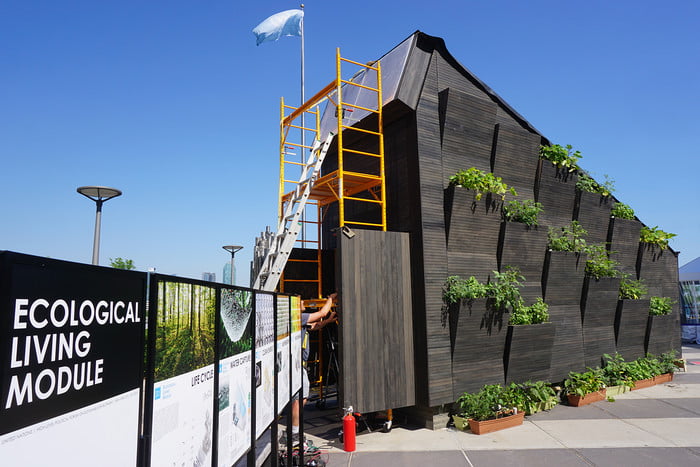
Achieving this goal in the face of growing urbanization requires smart, new housing solutions. This is where ELM–the Ecological Living Module–comes in. The Ecological Living Module is a collaboration between the UN Environment and UN Habitat, along with partners led by the Yale University School of Architecture and the Yale’s Center for Ecosystems in Architecture (CEA) with Gray Organschi Architects at the design helm. It is a 22-square-meter new eco-housing module intended to spark debate and new ideas on how to redesign the way we live; it was on display throughout July 2018 on the UN Plaza in New York City.

The Ecological Living Module is designed to demonstrate strategies for residential construction that provide high-quality, efficient, and flexible housing while supporting sustainable development in its region of deployment. For the New York City version of the Ecological Living Module, this included materials, systems, and micro-farming produce appropriate for the corresponding locality; as future iterations of the Ecological Living Module are built-out–such as one in Kenya, the home of the UN Environment Programmes (UNEP) and UN Habitat–those same materials, systems, and produce will be substituted accordingly.

Currently, the Ecological Living Module includes systems that encompass waste treatment, thermal comfort, micro-farming infrastructure, indoor air purification, general data & systems integration, water collection & purification, bio-based renewable materials, and solar energy. Some of these systems–such as water collection & purification–are almost completely out of sight, taking the form of rain water and on-site potable water collection, as well as tucked away filtration systems. Meanwhile, features such as the micro-farming wall are immediately visible on the Ecological Living Module as an exterior wall that houses a multitude of local produce. The net effect is a compact housing unit that by virtue of its efficient design illustrates a by-necessity degree of style and modernism.

Part of the Ecological Living Module’s design is also its prefabrication. Every unit is made of prefabricated components that require minimal construction, allowing for scalable shipping and deployment. This kind quick deployment is also a natural fit for relief housing during natural disasters and suggests a multitude of uses for the Ecological Living Module and its future iterations. The time required to prefabricate a single ELM is only 4 weeks, with a requirement of only 2 days to install the module once on site.

The best way to understand the implications of the Ecological Living Module is to visit it for yourself–while it is moving on from the UN Plaza in New York, the ELM will be popping elsewhere in the coming months, so keep an eye out for it. Approaching the ELM, with its micro-farm wall and slanted, solar panel fitted roof, the first thought might be how nouveaux and contemporary its design is. Then, as you step inside to see its compact, yet highly functional interior–complete with kitchen, lofted bedroom, composting toilet / shower room, and sitting room entryway–you’ll witness as form and function come seamlessly together, all in the name of a low cost, sustainable solution to the ever-present problem of providing people what they’ve needed since time immemorial: shelter.

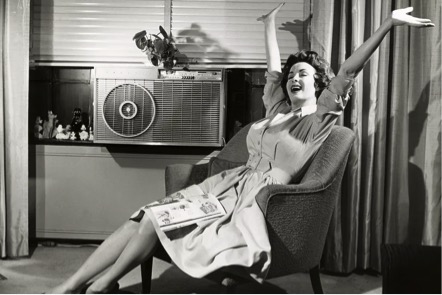
The irony that air conditioning contributes to global warming is hard to miss: as temperatures increase, the more we use air conditioning—and the more we use air conditioning, the more we heat the planet. And yet this piece of the puzzle is largely missing from the climate change dialogue. According to this New York Times article by Lisa Friedman, one reason is that coolant chemicals (refrigerants) don’t make for a very sexy dinner party conversation.

In 1987, the Montreal Protocol, an international treaty designed to protect the ozone layer by phasing out the production of numerous substances, namely CFCs, that are responsible for ozone depletion, was signed. Hydrofluorocarbons (HFCs) became the alternative. While HFCs are less directly harmful to the ozone layer, they are still greenhouse gases and, according to the EPA, are designated as having “high global warming potential (GWP).”

An amendment to the Montreal Protocol was reached in Kigali last year, geared to eliminate the use of HFCs. Another NYT article, reporting on the deal, states that HFCs “function as a sort of supercharged greenhouse gas, with 1,000 times the heat-trapping potency of carbon dioxide.” Phasing out HFC’s could mean “avoiding an estimated half degree Celsius of warming by 2100.” The richest countries, including the US, are supposed to freeze HFC consumption by 2018. But the United States’ relationship to this amendment is unclear at this point.

Reimagining cooling is essential to approaching the problem of climate change and one of the major factors that could lead to emission reduction. If we change how we cool ourselves, we could significantly lower our potential warming from the predicted 4 to 5 degree increase.

The Montreal Protocol caused such a shift in the production and science around cooling, motivated by our clear impact on the environment, that it gives this writer hope another agreement like it can be reached. The new amendment is one step of many, but it is a big step.

Factories that manufacture air conditioners are also a large contributor to carbon emissions. Friedman’s article goes on to discuss the efficiency of air conditioning production: demand for air conditioning is increasing, which means the energy needed for production will increase as well. “1.6 billion new air-conditioners by 2050 means thousands of new power plants will have to come on line to support them.”

The demand for air conditioning is growing rapidly. Without innovation, this will only contribute further to global warming, and hence to an even greater demand for cooling technologies—an endless loop. That’s why these issues of cooling chemicals and efficiency are starting to be approached in creative, interdisciplinary, and comprehensive ways, across the interconnected fields of science and design. Innovation and policy changes go hand-in-hand when it comes to air products, which, to me, is a pretty sexy dinner party topic.

Air conditioning and modern architecture are more connected than what you think and the article “How air conditioning shaped modern architecture – and changed our climate” proves it. The writer, Patrick Sisson, provides us with an entertaining and didactic tour around architecture, technology and air. What we found very exciting about this piece is that while Sisson demonstrates how numerous building typologies adapted to the sudden freedom provided by air conditioning, he also emphasizes that artificial cooling has fueled today’s energy and environmental crisis.

In other words: yes, air conditioning allowed architects to design towers without atriums or light wells; yes, air conditioning “meant workers didn’t need to sit near a window and hence “offices could suddenly have larger floorplates, encouraging collaboration and denser construction”; yes, air conditioning made sealed buildings possible –hence, receiving no city dirt and dust through open windows. But of course, all these “advantages” had a flipside: “The adoption of the “windowless wall” created the fluorescent-lit, dull and dim office spaces many workers abhor” and major health implications were derived from the unhealthy air quality inside closed-off buildings. But what’s even worst: “the most damaging part of this shift has been the cost, in energy and carbon emissions, of our cool new world. By 2014, 87 percent of U.S. homes had some form of air conditioning”. The cooling of buildings and vehicles in the United States “contributes to half a billion metric tons of carbon dioxide emissions every year. We consume more energy for residential air conditioning than all other countries combined, although, with other countries such as China and India in pursuit of glass-walled visions of modernity, that is going to change, and not in a good way. Due in large part to indoor climate control, buildings utilize half of total U.S. energy consumption”.

All in all, we certainly agree with Sisson when he states: “Air conditioning promised a cooler, more modern environment indoors. But unless architects and designers continue to develop more green, efficient ways to keep our buildings cool, it will be increasingly difficult to escape the warming environment outside”.

For the complete article click here.

Photo Credit: “Curbed”

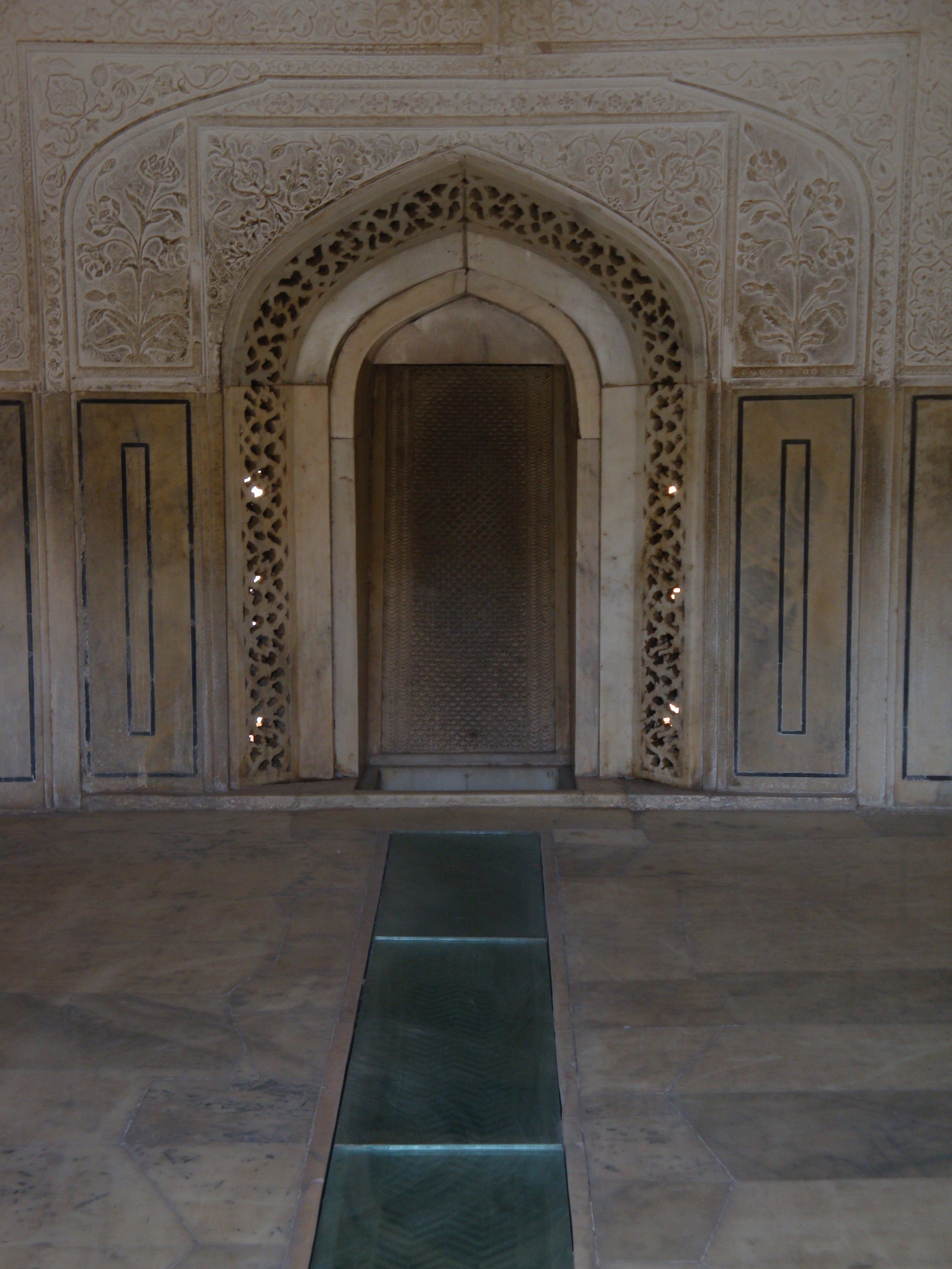
Located just outside of Jaipur, India, the Amer Fort, also known as the Amer Palace, was built in 1592 by Raja Man Singh, and remains in pristine condition today. Like many Indian palaces, buildings, and urban dwellings, the Amer Fort still benefits from some of the most traditional and exquisite air cooling technologies. By creating different rooms and places for different climates and temperatures, the Fort’s architects planned for the seasonal use of varying spaces throughout the palace grounds. For example, the “Pleasure garden” is located in the center of a lake and is used for exceptionally hot summer days. If the palace’s dwellers or visitors become uncomfortable outdoors, they can migrate to the center of the lake to cool off. Similarly, inside the Amer Fort movable screens and curtains were used to keep spaces like the emperor’s throne as cool as the open lake. As Vinod Gupta, Assistant Professor of Architecture at the School of Planning & Architecture in New Delhi, writes, “It is said that in summer there were three sets of screens used, two of them grass mats kept wet by sprinkling of water. Heavy quilted curtains were suspended in place of these screens in winter.” Additionally, one of the most fascinating air cooling technologies employed at the Amer Fort are the apertures, some of which are no larger than one centimeter, designed to let in air which then gets cooled within the larger structure of the building by filtering through an underground (and therefore shaded) tunnel where air flows over shaded water (pictured) to keep it cool.

While beginning to write this post I found myself struggling to employ the appropriate lexicon to describe the concept of air cooling without air conditioning, an area of study important to FutureAir but still somewhat obscure to an average city dweller like myself. As Gupta writes, the energy crisis has spurred the accumulation of a vast body of literature about “passive cooling systems,” or technology that cools air naturally and sustainably, but he argues that the strategies employed by indigenous Indian builders and architects remain the most developed. According to Gupta, “When [modern] architects talk of passive cooling, it is as if the maintenance of certain specified temperatures in a building is an end in itself. On the other hand, the indigenous builder could not care less if the building was cool or warm so long as people could be comfortable within or without the building.” Without electricity indigenous Indian architects used their knowledge of physics and the climate in which they lived to strive for comfortable and utilitarian structures, which are, as a result, quite beautiful.

REFERENCES
“Amer Fort.” Jaipur: The Pink City, August 24, 2016. http://www.jaipur.org.uk/forts-monuments/amber.html.
Gupta, Vinod. Energy and Habitat: Town Planning and Building Design for Energy Conservation. John Wiley & Sons (Asia) Pte Ltd, 1984.