FutureAir

Fashion is a Waste Industry

New York Fashion Week is officially over (and so is the Westminster Dog Show). New York can return to its normal chaos and enjoy fewer crowds…for the time being.

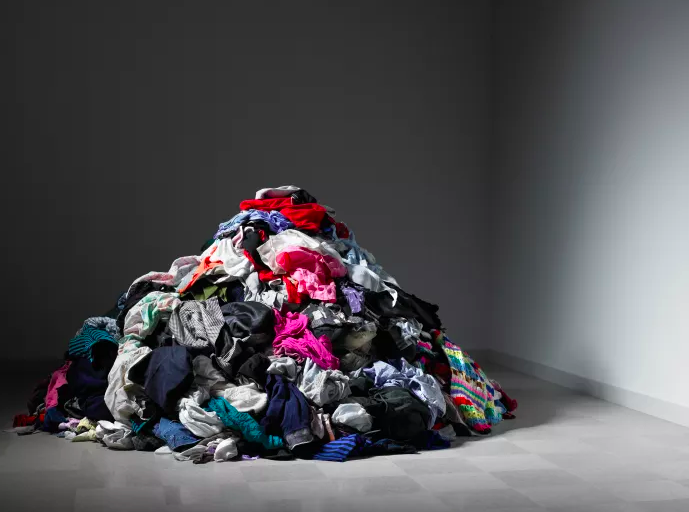
Whenever fashion week arrives, on the street or the Instagram feed, the waste is palpable. The excess of the fashion industry is on full display. Each runway show hands out goodie bags of individually packaged items. Brands display their wares down the runway as the symbolic marker of another season of fast fashion and mass production. Plastic water bottles litter the street. With over 230,000 attendees and 300 shows in one week, sustainability is the last thought during fashion week, if a thought at all.

However, the fashion industry is one of the largest, albeit understated, culprits of waste in the United States. According to the EPA, discarded clothes are the main textiles found in Municipal Solid Waste (MSW)–aka landfill waste. In 2015, about 16 million tons of textiles were produced. 65% of those textiles ended up in a landfill.

Not to mention that plastics from clothing fibers often end up in what becomes polluted oceans. Additionally, clothing donations get dropped in developing countries like bombs to sit for years emitting toxic gases. Global clothing production has increased two-fold over the past two decades, which means the detrimental effects increase as well.

That is not to say that fashion is, hard line, bad. Fashion is representative, it’s cultural, it makes us feel good! However, we must hold the fashion industry to the same sustainability standards we ask of our food and energy producers. And we must reorient our relationship to the fashion we choose to wear by investing in durable items form conscientious brands.

Sustainable Fashion Day

This past fashion week, Planet Fashion TV hosted a Sustainable Fashion Day event. The night showcased a range of innovative designers and producers at the forefront of the sustainable fashion movement.

The night began with a panel session between Planet Fashion producer, Celia Evans and Kat Maryfield. Maryfield is the owner of Kat’s Naturals, an organic cosmetic line that pairs the beneficial power of CBD with the skins natural chemicals for enhancing results. And of course, everyone present got to take home a sample.

The next panel featured clothing designer Bridgett Artise, and Angela Clark, a jewelry designer who salvages old stones and gems. Artise uses old clothes, from thrift stores or personal donations, and amends the items using stitch and patchwork. This process, which maintains the original article of clothing but gives it new life, is known as upcycling. Similarly, Clark keeps found gems and stones in their original condition because, as she says, it has already lasted so long! Both women focused on repurposing items already in existence to reduce waste in the fashion industry.

The final panel featured Stacy Change of Veerah shoes and Oliver Tolentino, a high-end fashion designer. Veerah uses organic materials such as apple skins and algae foam to make elegant footwear. Stacy began her shoe line because she wanted to “align her values with her closet.”

Tolentino, a local LA designer, displayed his eco gown line at his first ever fashion week appearance. For his eco line, Tolentino, remarkably, uses pineapple fibers to weave the fabrics that form his gowns. The end result is completely compostable! Tolentino derives the pineapple fiber and weaving techniques from Philippine tradition. Thus, his product is sustainable two times over: he uses natural materials and traditional techniques that sustain economic growth in small villages.

After the panel discussions concluded the audience had a chance to ask questions which made the experience feel collaborative–as if we were all there to reach a solution together. Then for the main event, the fashion show! It was amazing to see what sustainable fashion looked like: beautiful, original, and overall, not that different from physically “new” fashion. The main difference being that you can feel better wearing it.

Future of Fashion

Hopefully, Sustainable Fashion Day is the beginning of a new trend. Sustainable clothing is marketable and fashionable! It is time to revert back to longevity and turn away from fast fashion. However, there is still a long way to go. The fashion industry is also responsible for criminal workforce practices, toxic levels of carbon dioxide production, and the list goes on. The important message to take away from Sustainable Fashion Day is that environmental degradation infiltrates all sectors of our lives. There is always room for us to make more informed and sustainable decisions to protect our planet and ourselves.

Written by Mollie Wodenshek for FutureAir

Reference
Cooper, Kelly-Leigh, “Fast fashion: Inside the fight to end the silence on waste,” BBC: News.
EPA, “Textiles: Material-Specific Data,” United States Environmental Protection Agency.

Photo
iStock

The irony that air conditioning contributes to global warming is hard to miss: as temperatures increase, the more we use air conditioning—and the more we use air conditioning, the more we heat the planet. And yet this piece of the puzzle is largely missing from the climate change dialogue. According to this New York Times article by Lisa Friedman, one reason is that coolant chemicals (refrigerants) don’t make for a very sexy dinner party conversation.

In 1987, the Montreal Protocol, an international treaty designed to protect the ozone layer by phasing out the production of numerous substances, namely CFCs, that are responsible for ozone depletion, was signed. Hydrofluorocarbons (HFCs) became the alternative. While HFCs are less directly harmful to the ozone layer, they are still greenhouse gases and, according to the EPA, are designated as having “high global warming potential (GWP).”

An amendment to the Montreal Protocol was reached in Kigali last year, geared to eliminate the use of HFCs. Another NYT article, reporting on the deal, states that HFCs “function as a sort of supercharged greenhouse gas, with 1,000 times the heat-trapping potency of carbon dioxide.” Phasing out HFC’s could mean “avoiding an estimated half degree Celsius of warming by 2100.” The richest countries, including the US, are supposed to freeze HFC consumption by 2018. But the United States’ relationship to this amendment is unclear at this point.

Reimagining cooling is essential to approaching the problem of climate change and one of the major factors that could lead to emission reduction. If we change how we cool ourselves, we could significantly lower our potential warming from the predicted 4 to 5 degree increase.

The Montreal Protocol caused such a shift in the production and science around cooling, motivated by our clear impact on the environment, that it gives this writer hope another agreement like it can be reached. The new amendment is one step of many, but it is a big step.

Factories that manufacture air conditioners are also a large contributor to carbon emissions. Friedman’s article goes on to discuss the efficiency of air conditioning production: demand for air conditioning is increasing, which means the energy needed for production will increase as well. “1.6 billion new air-conditioners by 2050 means thousands of new power plants will have to come on line to support them.”

The demand for air conditioning is growing rapidly. Without innovation, this will only contribute further to global warming, and hence to an even greater demand for cooling technologies—an endless loop. That’s why these issues of cooling chemicals and efficiency are starting to be approached in creative, interdisciplinary, and comprehensive ways, across the interconnected fields of science and design. Innovation and policy changes go hand-in-hand when it comes to air products, which, to me, is a pretty sexy dinner party topic.

Air conditioning and modern architecture are more connected than what you think and the article “How air conditioning shaped modern architecture – and changed our climate” proves it. The writer, Patrick Sisson, provides us with an entertaining and didactic tour around architecture, technology and air. What we found very exciting about this piece is that while Sisson demonstrates how numerous building typologies adapted to the sudden freedom provided by air conditioning, he also emphasizes that artificial cooling has fueled today’s energy and environmental crisis.

In other words: yes, air conditioning allowed architects to design towers without atriums or light wells; yes, air conditioning “meant workers didn’t need to sit near a window and hence “offices could suddenly have larger floorplates, encouraging collaboration and denser construction”; yes, air conditioning made sealed buildings possible –hence, receiving no city dirt and dust through open windows. But of course, all these “advantages” had a flipside: “The adoption of the “windowless wall” created the fluorescent-lit, dull and dim office spaces many workers abhor” and major health implications were derived from the unhealthy air quality inside closed-off buildings. But what’s even worst: “the most damaging part of this shift has been the cost, in energy and carbon emissions, of our cool new world. By 2014, 87 percent of U.S. homes had some form of air conditioning”. The cooling of buildings and vehicles in the United States “contributes to half a billion metric tons of carbon dioxide emissions every year. We consume more energy for residential air conditioning than all other countries combined, although, with other countries such as China and India in pursuit of glass-walled visions of modernity, that is going to change, and not in a good way. Due in large part to indoor climate control, buildings utilize half of total U.S. energy consumption”.

All in all, we certainly agree with Sisson when he states: “Air conditioning promised a cooler, more modern environment indoors. But unless architects and designers continue to develop more green, efficient ways to keep our buildings cool, it will be increasingly difficult to escape the warming environment outside”.

For the complete article click here.

Photo Credit: “Curbed”

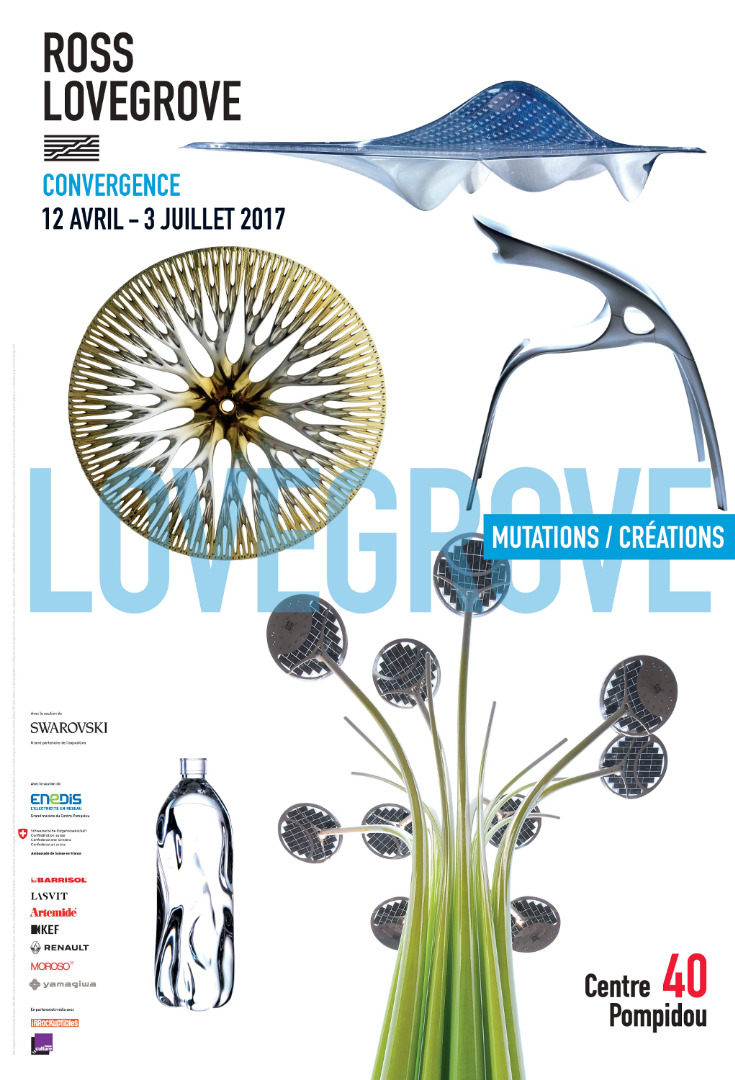
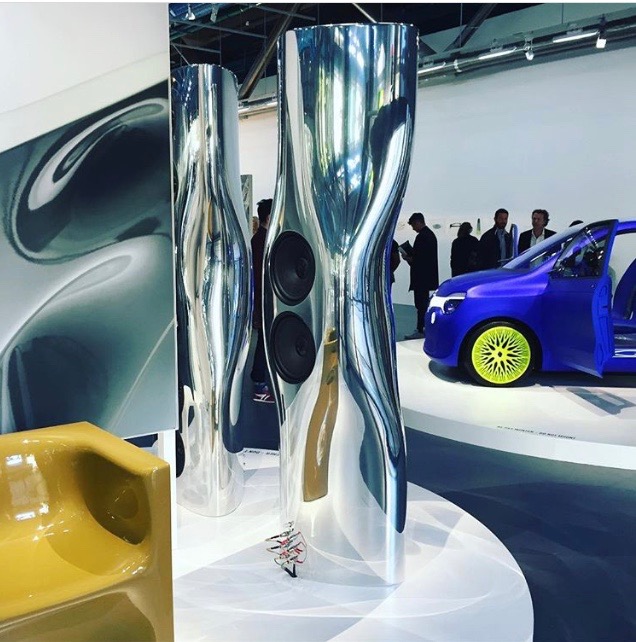
“Convergence”, the remarkable installation of Ross Lovegrove’s iconic work, is on view through July 3rd at the Centre Pompidou in Paris. This impressive exhibition looks back at Lovegrove’s “quest for new paradigms in creation, at the crossroads of art, design, technology and nature.” In his own words: “design brings together art, science and technology (…) Design is in a constant state of reinvention. Because it involves transforming natural resources into useful objects, designers are central to the ecological issues that affect our emotional and aesthetic state, and our collective awareness. We are a rapidly, continuously evolving species that has to adapt.”

Here we share an interview with Lovegrove about “Convergence” that Télé Matin has recently aired. If you want to get a glimpse of the amazing designs that are exquisitely displayed by the designer himself, it’s an inspiring must see!

Credits: Centre Pompidou, Télématin, France 2, Sylvie Adigard.

The Centre Pompidou in Paris devotes a first “forward-looking retrospective” to the work of the industrial designer Ross Lovegrove, reflecting an overall vision of design based on the natural evolutionary process. The exhibition looks back at this quest for new paradigms in creation, at the crossroads of art, design, technology and nature.

“The idea of ‘convergence’ is important because it brings art and science together. It is an overall approach to design that ought to play an essential role in the 21st-century ‘Renaissance’ we are currently experiencing, which will lead to tangible creative principles that concern us all, wherever we are in the world,” he says.

For Ross Lovegrove, designers are interpreters or “sculptors” of technology. His objects with their dynamic shapes, seemingly in virtual movement, reflect digital developments in the contemporary world while opening out to new ways of living, marked by a “sustainable” awareness of the world where form harmonizes with nature. The designer draws on the growth principles of natural forms to conceive complex structures with innovative materials, focusing on the lightness of form and use. Biomimicry and the minimal use of energy are central to his approach.

Ross Lovegrove’s intelligent use of materials and industrial processes is unique.
Through designs that range from everyday objects to cars, aviation and architecture, the designer has developed the concept of “DNA” (Design, Nature, Art), creating a powerful link between digital technologies, the science of materials and organic forms. As well as observing nature, he draws fundamental inspiration from the hole-riddled sculptural forms of Henry Moore, the paintings of Francis Bacon and the “kinetic” sculptures of Tony Cragg.

Ross Lovegrove is one of the few designers who makes biology, anthropology, physics and ecology central to his work, and promotes a humanistic vision of design as part of a holistic approach to creation. In his view, “the idea of convergence intimates a time where the merging of all things takes the form of a profound change in the way we see and make the physical world around us”.

“Design is a sphere that is continually being reinvented. Because it involves transforming natural resources into useful objects, the designer is at the very heart of today’s technological issues, which affect not only our own emotional and aesthetic state but also our collective awareness as human beings – a species that is ever rapidly evolving and needs to adapt continuously.” Ross Lovegrove

Photo Credit: Arturo Tedeshi

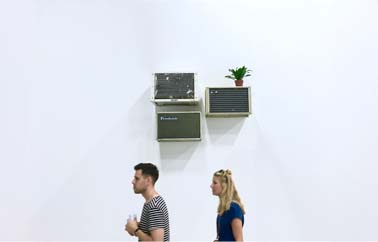
Mika Rottenberg’s work, The AC Trio, 2016 displayed at the Palais de Tokyo’s summer exhibition, Happy Sapien, inverts her viewer’s daily relationship to air conditioning by displaying the back end of three units inside the gallery space. By installing what most air conditioner users would consider to be the uglier side of their units which usually hang out of windows and always leak, Rottenberg isolates the grotesque aesthetics of the appliance by removing its usual function. With a small planter sitting atop the third unit in the trio, Rottenberg pokes fun at a meager attempt at integrating flora into the street-side of urban life. Below Rottenberg’s trio sit two pans atop hotplates and another plant. The filthy drip that every city dweller has experienced falls onto the pans that cook our food and the plants that hydrate our earth. The viewer may even begin to imagine the heat of the hotplates rising up into the units. By appealing to her viewer on a visceral level, calling to mind the use of daily objects and the flow of liquid, sound, and heat between them, Rottenberg begins to create an aesthetic of that which is omnipresent and yet invisible, air.

Ceiling Fan Composition #2, 2016, another of Rottenberg’s works displayed in Happy Sapien, is comprised of the colorful and vibrant display of the four fans behind the gallery wall. Like disco-balls rotating to an unseen rhythm, Rottenberg’s fans become mesmerizing, each illuminated by a different color of neon light. While the AC trio slowly drips filth, pushed out of someone’s window and spilling over into the gallery space, the fans spin together external to the gallery space in a neat composition. By encasing her fans outside of the room in which the viewer resides, Rottenberg, once again, removes their usual function. In so doing, she opens a space for the viewer to interact with air on an unusual level; aesthetically, rhythmically, and hopefully, with an eye toward the future of air.

Written by Tess Gruenberg and Francesca Michel