FutureAir

For as long as there have been people, we have needed shelter: a place we can call home, where we can feel safe from the dangers and stresses of the world. Yet today, despite the millennia of progress that humanity has enjoyed, there are still nearly one billion people who live in informal settlements, often without access to energy and sanitation. The 2030 Agenda for Sustainable Development, adopted and advocated for by the United Nations, seeks to provide both decent lives and adequate housing to those people in a manner that also accounts for the impact the housing sector has on our planet.

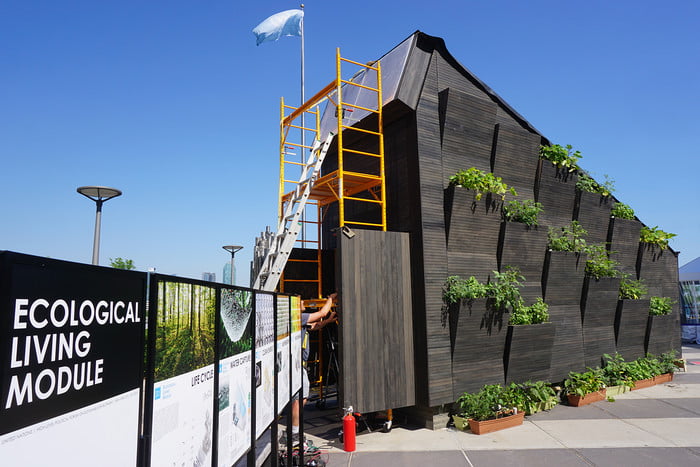
Achieving this goal in the face of growing urbanization requires smart, new housing solutions. This is where ELM–the Ecological Living Module–comes in. The Ecological Living Module is a collaboration between the UN Environment and UN Habitat, along with partners led by the Yale University School of Architecture and the Yale’s Center for Ecosystems in Architecture (CEA) with Gray Organschi Architects at the design helm. It is a 22-square-meter new eco-housing module intended to spark debate and new ideas on how to redesign the way we live; it was on display throughout July 2018 on the UN Plaza in New York City.

The Ecological Living Module is designed to demonstrate strategies for residential construction that provide high-quality, efficient, and flexible housing while supporting sustainable development in its region of deployment. For the New York City version of the Ecological Living Module, this included materials, systems, and micro-farming produce appropriate for the corresponding locality; as future iterations of the Ecological Living Module are built-out–such as one in Kenya, the home of the UN Environment Programmes (UNEP) and UN Habitat–those same materials, systems, and produce will be substituted accordingly.

Currently, the Ecological Living Module includes systems that encompass waste treatment, thermal comfort, micro-farming infrastructure, indoor air purification, general data & systems integration, water collection & purification, bio-based renewable materials, and solar energy. Some of these systems–such as water collection & purification–are almost completely out of sight, taking the form of rain water and on-site potable water collection, as well as tucked away filtration systems. Meanwhile, features such as the micro-farming wall are immediately visible on the Ecological Living Module as an exterior wall that houses a multitude of local produce. The net effect is a compact housing unit that by virtue of its efficient design illustrates a by-necessity degree of style and modernism.

Part of the Ecological Living Module’s design is also its prefabrication. Every unit is made of prefabricated components that require minimal construction, allowing for scalable shipping and deployment. This kind quick deployment is also a natural fit for relief housing during natural disasters and suggests a multitude of uses for the Ecological Living Module and its future iterations. The time required to prefabricate a single ELM is only 4 weeks, with a requirement of only 2 days to install the module once on site.

The best way to understand the implications of the Ecological Living Module is to visit it for yourself–while it is moving on from the UN Plaza in New York, the ELM will be popping elsewhere in the coming months, so keep an eye out for it. Approaching the ELM, with its micro-farm wall and slanted, solar panel fitted roof, the first thought might be how nouveaux and contemporary its design is. Then, as you step inside to see its compact, yet highly functional interior–complete with kitchen, lofted bedroom, composting toilet / shower room, and sitting room entryway–you’ll witness as form and function come seamlessly together, all in the name of a low cost, sustainable solution to the ever-present problem of providing people what they’ve needed since time immemorial: shelter.

The irony that air conditioning contributes to global warming is hard to miss: as temperatures increase, the more we use air conditioning—and the more we use air conditioning, the more we heat the planet. And yet this piece of the puzzle is largely missing from the climate change dialogue. According to this New York Times article by Lisa Friedman, one reason is that coolant chemicals (refrigerants) don’t make for a very sexy dinner party conversation.

In 1987, the Montreal Protocol, an international treaty designed to protect the ozone layer by phasing out the production of numerous substances, namely CFCs, that are responsible for ozone depletion, was signed. Hydrofluorocarbons (HFCs) became the alternative. While HFCs are less directly harmful to the ozone layer, they are still greenhouse gases and, according to the EPA, are designated as having “high global warming potential (GWP).”

An amendment to the Montreal Protocol was reached in Kigali last year, geared to eliminate the use of HFCs. Another NYT article, reporting on the deal, states that HFCs “function as a sort of supercharged greenhouse gas, with 1,000 times the heat-trapping potency of carbon dioxide.” Phasing out HFC’s could mean “avoiding an estimated half degree Celsius of warming by 2100.” The richest countries, including the US, are supposed to freeze HFC consumption by 2018. But the United States’ relationship to this amendment is unclear at this point.

Reimagining cooling is essential to approaching the problem of climate change and one of the major factors that could lead to emission reduction. If we change how we cool ourselves, we could significantly lower our potential warming from the predicted 4 to 5 degree increase.

The Montreal Protocol caused such a shift in the production and science around cooling, motivated by our clear impact on the environment, that it gives this writer hope another agreement like it can be reached. The new amendment is one step of many, but it is a big step.

Factories that manufacture air conditioners are also a large contributor to carbon emissions. Friedman’s article goes on to discuss the efficiency of air conditioning production: demand for air conditioning is increasing, which means the energy needed for production will increase as well. “1.6 billion new air-conditioners by 2050 means thousands of new power plants will have to come on line to support them.”

The demand for air conditioning is growing rapidly. Without innovation, this will only contribute further to global warming, and hence to an even greater demand for cooling technologies—an endless loop. That’s why these issues of cooling chemicals and efficiency are starting to be approached in creative, interdisciplinary, and comprehensive ways, across the interconnected fields of science and design. Innovation and policy changes go hand-in-hand when it comes to air products, which, to me, is a pretty sexy dinner party topic.

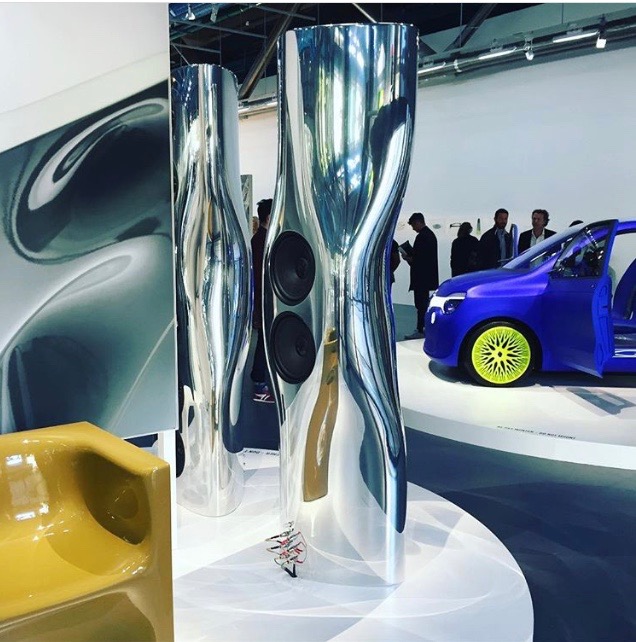
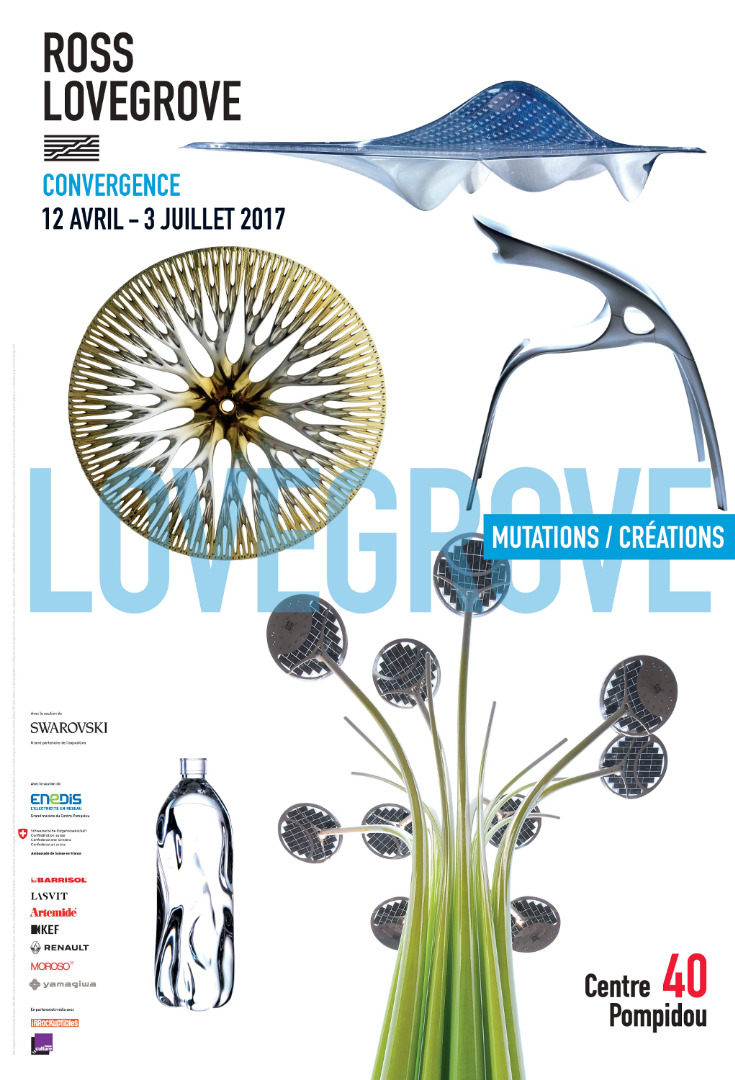
“Convergence”, the remarkable installation of Ross Lovegrove’s iconic work, is on view through July 3rd at the Centre Pompidou in Paris. This impressive exhibition looks back at Lovegrove’s “quest for new paradigms in creation, at the crossroads of art, design, technology and nature.” In his own words: “design brings together art, science and technology (…) Design is in a constant state of reinvention. Because it involves transforming natural resources into useful objects, designers are central to the ecological issues that affect our emotional and aesthetic state, and our collective awareness. We are a rapidly, continuously evolving species that has to adapt.”

Here we share an interview with Lovegrove about “Convergence” that Télé Matin has recently aired. If you want to get a glimpse of the amazing designs that are exquisitely displayed by the designer himself, it’s an inspiring must see!

Credits: Centre Pompidou, Télématin, France 2, Sylvie Adigard.

The Centre Pompidou in Paris devotes a first “forward-looking retrospective” to the work of the industrial designer Ross Lovegrove, reflecting an overall vision of design based on the natural evolutionary process. The exhibition looks back at this quest for new paradigms in creation, at the crossroads of art, design, technology and nature.

“The idea of ‘convergence’ is important because it brings art and science together. It is an overall approach to design that ought to play an essential role in the 21st-century ‘Renaissance’ we are currently experiencing, which will lead to tangible creative principles that concern us all, wherever we are in the world,” he says.

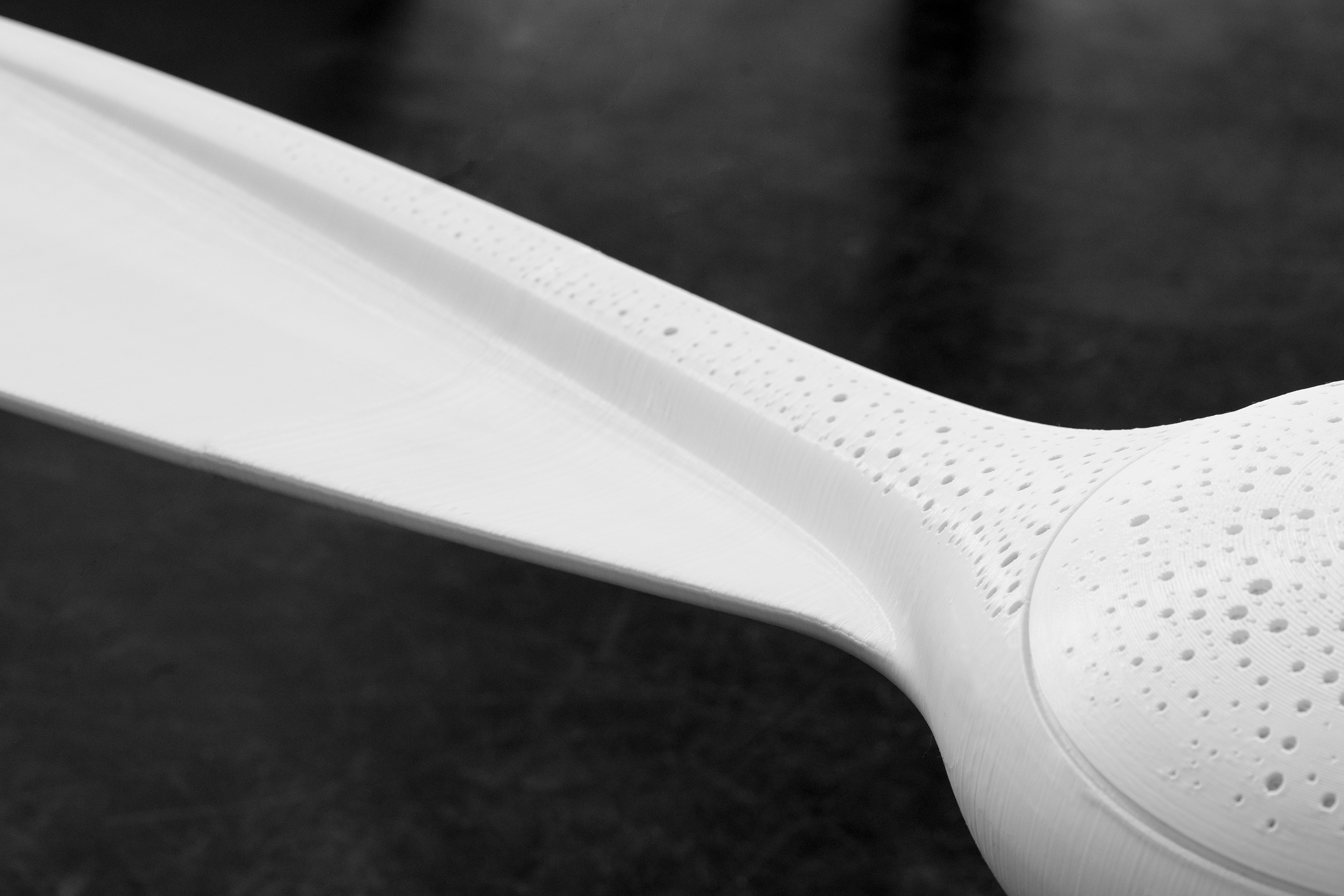
For Ross Lovegrove, designers are interpreters or “sculptors” of technology. His objects with their dynamic shapes, seemingly in virtual movement, reflect digital developments in the contemporary world while opening out to new ways of living, marked by a “sustainable” awareness of the world where form harmonizes with nature. The designer draws on the growth principles of natural forms to conceive complex structures with innovative materials, focusing on the lightness of form and use. Biomimicry and the minimal use of energy are central to his approach.

Ross Lovegrove’s intelligent use of materials and industrial processes is unique.
Through designs that range from everyday objects to cars, aviation and architecture, the designer has developed the concept of “DNA” (Design, Nature, Art), creating a powerful link between digital technologies, the science of materials and organic forms. As well as observing nature, he draws fundamental inspiration from the hole-riddled sculptural forms of Henry Moore, the paintings of Francis Bacon and the “kinetic” sculptures of Tony Cragg.

Ross Lovegrove is one of the few designers who makes biology, anthropology, physics and ecology central to his work, and promotes a humanistic vision of design as part of a holistic approach to creation. In his view, “the idea of convergence intimates a time where the merging of all things takes the form of a profound change in the way we see and make the physical world around us”.

“Design is a sphere that is continually being reinvented. Because it involves transforming natural resources into useful objects, the designer is at the very heart of today’s technological issues, which affect not only our own emotional and aesthetic state but also our collective awareness as human beings – a species that is ever rapidly evolving and needs to adapt continuously.” Ross Lovegrove

Photo Credit: Arturo Tedeshi

Design “Intraspective” at the Pompidou Center in Paris from April 12 – July 3, 2017, is a must see, while work continues on Lovegrove’s next venture: Re-imagining indoor air.

FutureAir, established in New York in 2014 by Simone Rothman and Ross Lovegrove, along with a team of scientists from Harvard, MIT and Columbia, sets out to provide increased awareness, highly innovative, smart-control applications and actionable products to monitor and deliver comfort and purity as well as energy efficiency for indoor air.

As the go-to platform for 21st century air-conditioning, FutureAir brings new awareness to the critical issue of indoor air pollution and its effect on health, comfort, productivity and general wellbeing. Sophisticated and affordable sensor technology developed by FutureAir, identifies harmful gas emissions and dust particulates, while monitoring room temperature and humidity to provide optimal thermal or “real-feel” indoor air comfort for home, school and office as well as in hotels and hospitals. Additionally FutureAir products, enabled with IoT device-to-device communication, regulate excessive energy output and “cooling waste” to reduce overconsumption and greenhouse gases emissions into our atmosphere.

The sleek Ross Lovegrove biomimetic designs for FutureAir products create a new standard for an industry sorely lacking in aesthetics. His late-career emphasis on Convergent Design, which combines emerging technology with new materials, is particularly evident in Lovegrove’s new designs for FutureAir. His organic, earth-centric works are inspired by the logic and beauty of nature mixed with social and environmental consciousness. “This idea of Convergence”, Lovegrove explains, “is an inevitability in this day and age, when we are looking for a new model of industrialization”. “Design will become more bespoke as we make only what we need and design’s beauty and logic creep in as ecology and as evolutionary. More and more designers will be asked to do something useful, to do something relevant.”

The future of quality air and the optimal indoor environment has found its designer. Ross Lovegrove…now partnering with science to evolve the way we breathe and live.

Photo credit: Andrew Bordwin